In this project, we are investigating a means of enhancing MRI signal in order to develop a new high-sensitivity pulmonary imaging method.
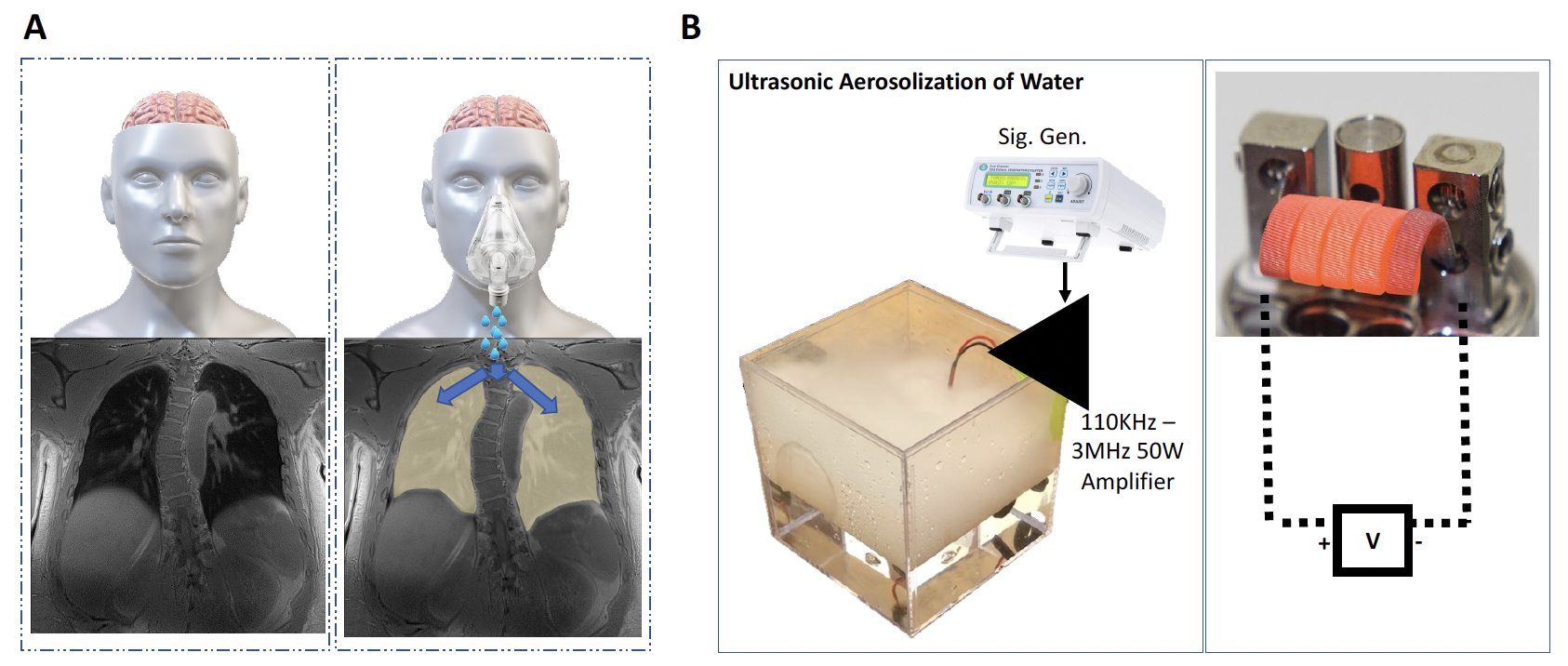
We are developing an Overhauser dynamic nuclear polarization (ODNP) platform to enhance nuclear magnetic resonance (NMR) and magnetic resonance imaging (MRI) signals through efficient electron–nuclear polarization transfer. An Overhauser dynamic nuclear polarization platform can enhance hydrogen magnetic resonance signal up to about 660 times by exciting unpaired electron spins with microwaves and transferring magnetization from electrons to hydrogen. The effect can be harnessed in MRI to enhance signal from lung structures and void spaces—notoriously challenging regions to image—by administering an inhalable aerosol derived from a hyperpolarized liquid mist. Our investigation has the potential to create a path toward in vivo ODNP-enhanced MRI with the use of inhalable, hyperpolarized aerosols, opening new possibilities for metabolic and physiological imaging of the lungs at low magnetic fields.
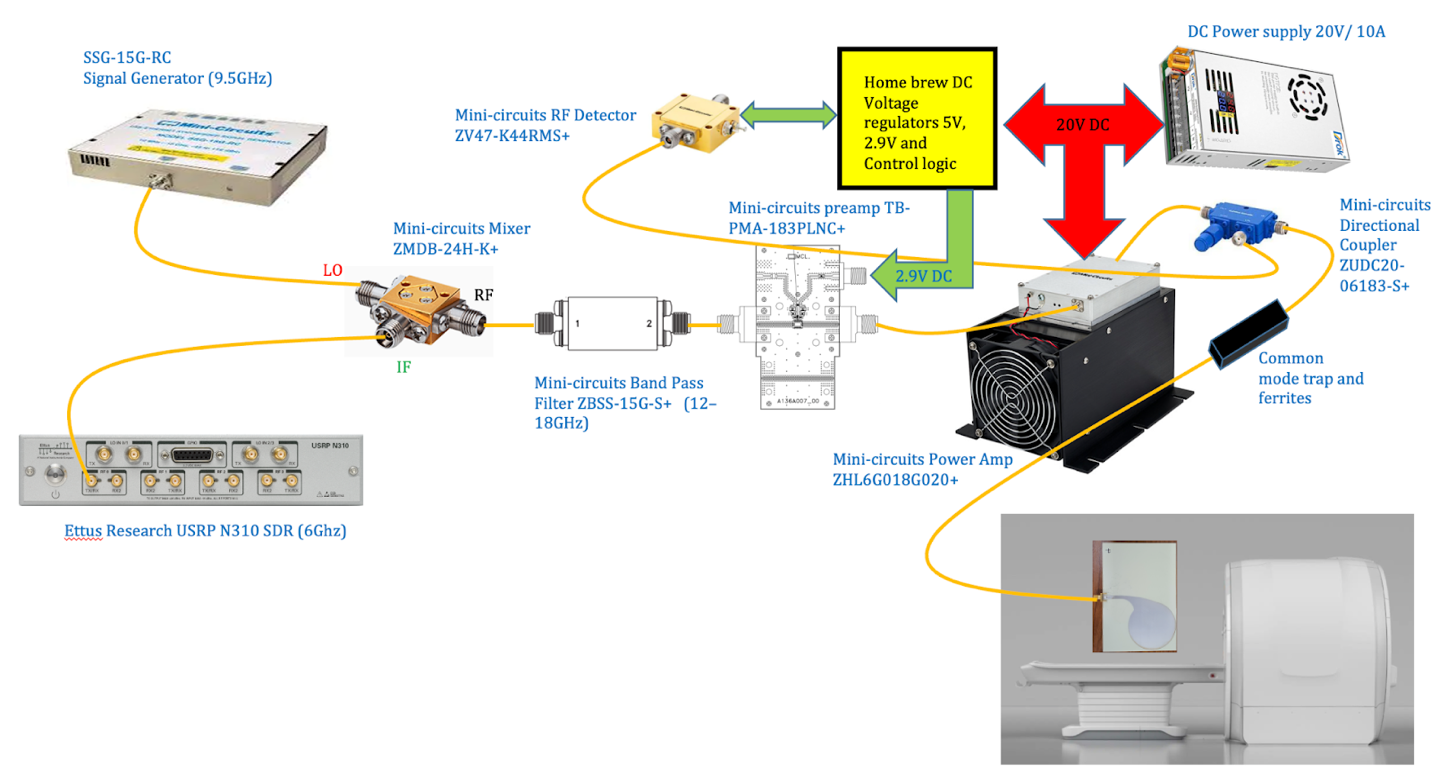
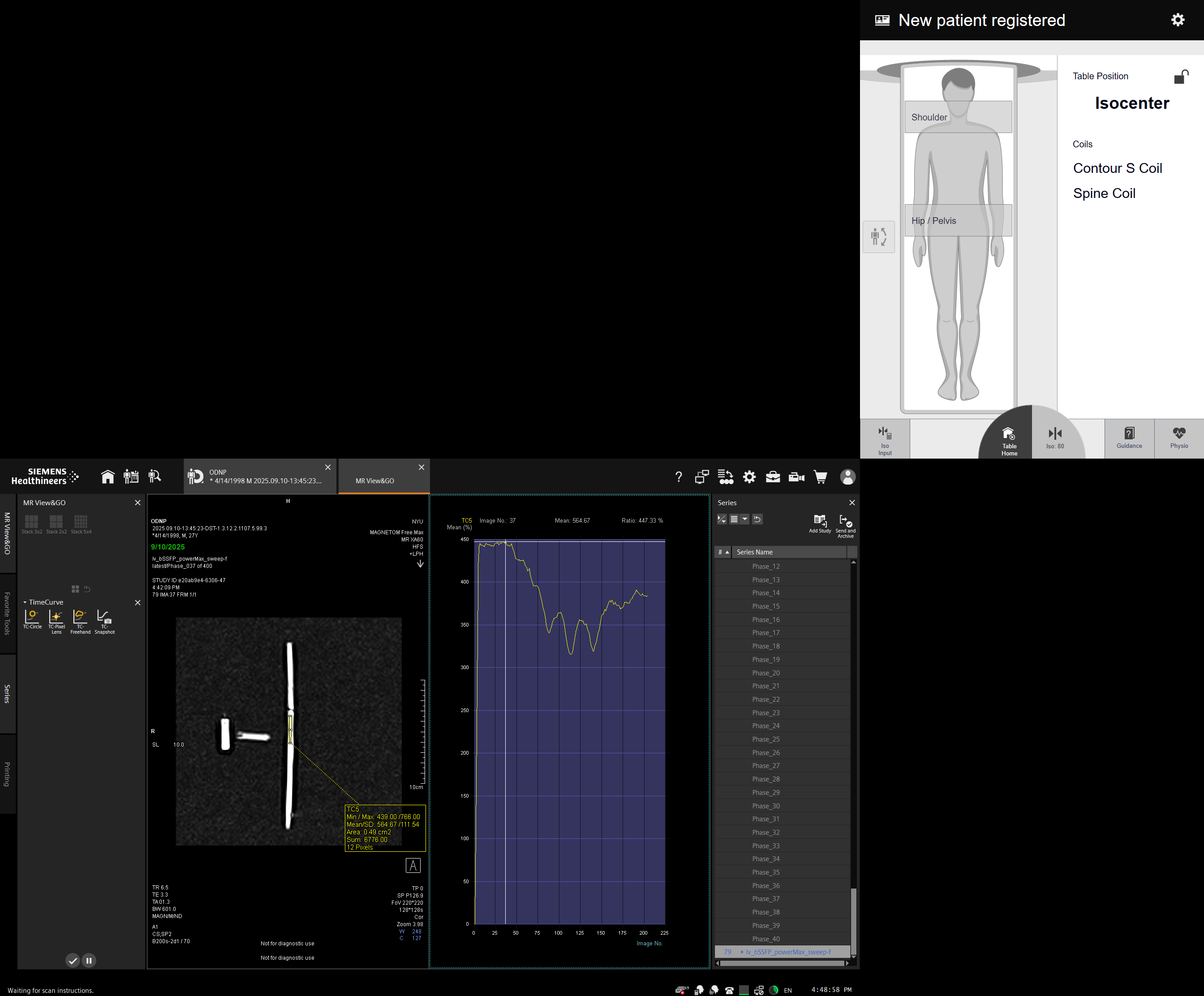
We have built a custom microwave transmission system and validated its operation at the electron spin resonance frequency range (approximately 15.5 GHz), corresponding to a magnetic field of 0.55 tesla. The transmission system relies on a signal generator and software-defined radios (SDR) to deliver power and signal processing functions. Experimental frequency sweeps confirmed electron spin resonance absorption at the predicted frequencies. To optimize energy delivery and polarization efficiency, we modeled loop-gap resonator and microwave cavities with waveguide as replacements for conventional antennas. We have observed up to sixfold signal enhancement using a loop-gap resonator. These compact resonators concentrate magnetic fields and provide high-quality Q factors suitable for ODNP applications.
Currently, we are working on minimizing relaxation loss during liquid-to-vapor transition and optimizing the enhancement via modification of the microwave irradiation and MRI sequence parameters.