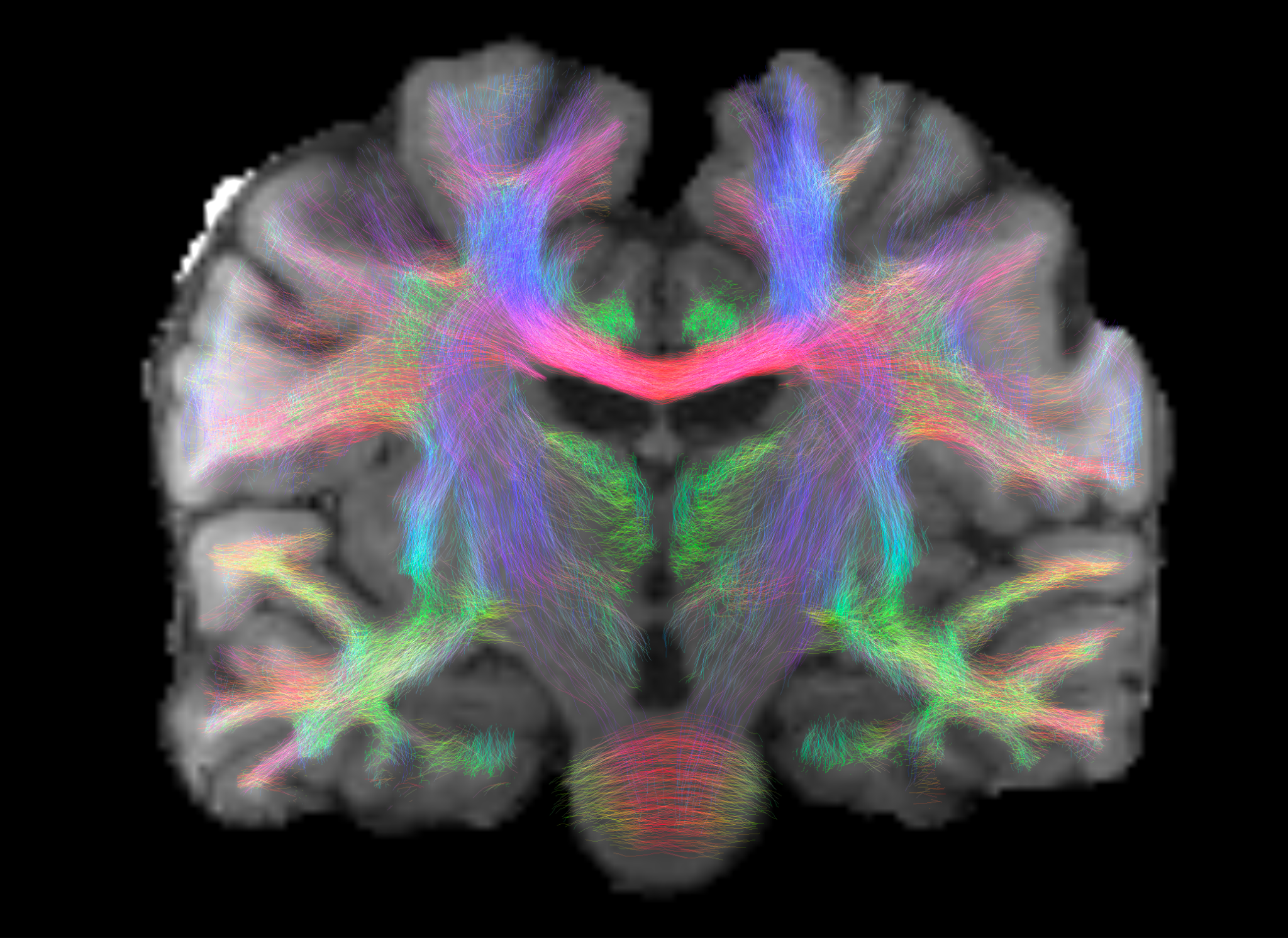
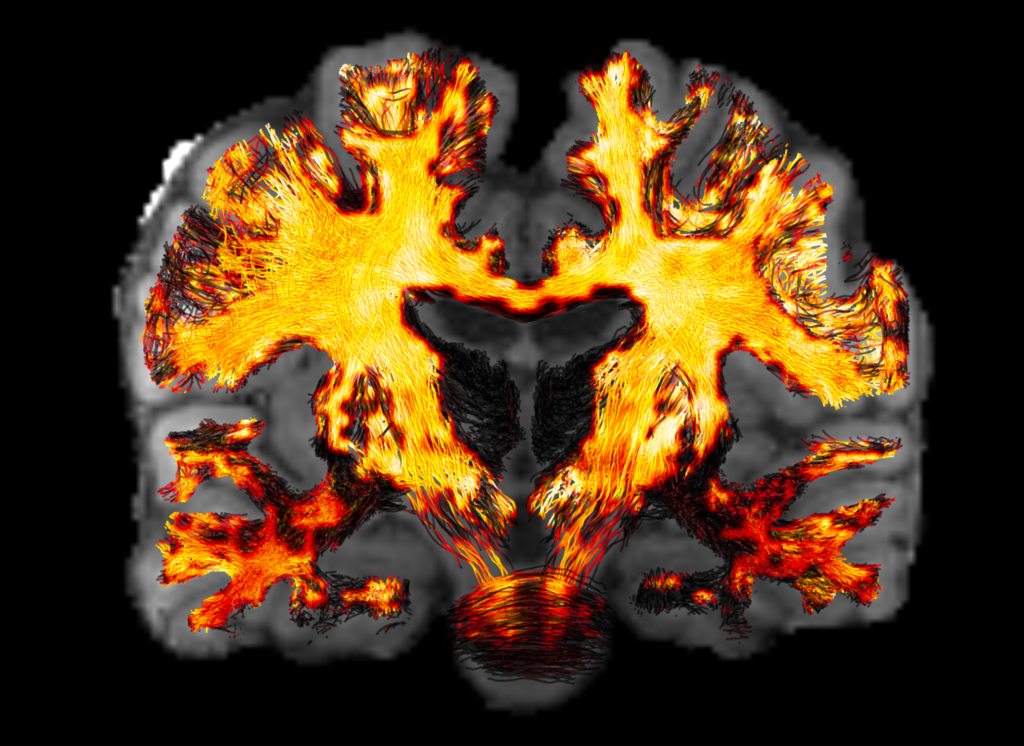
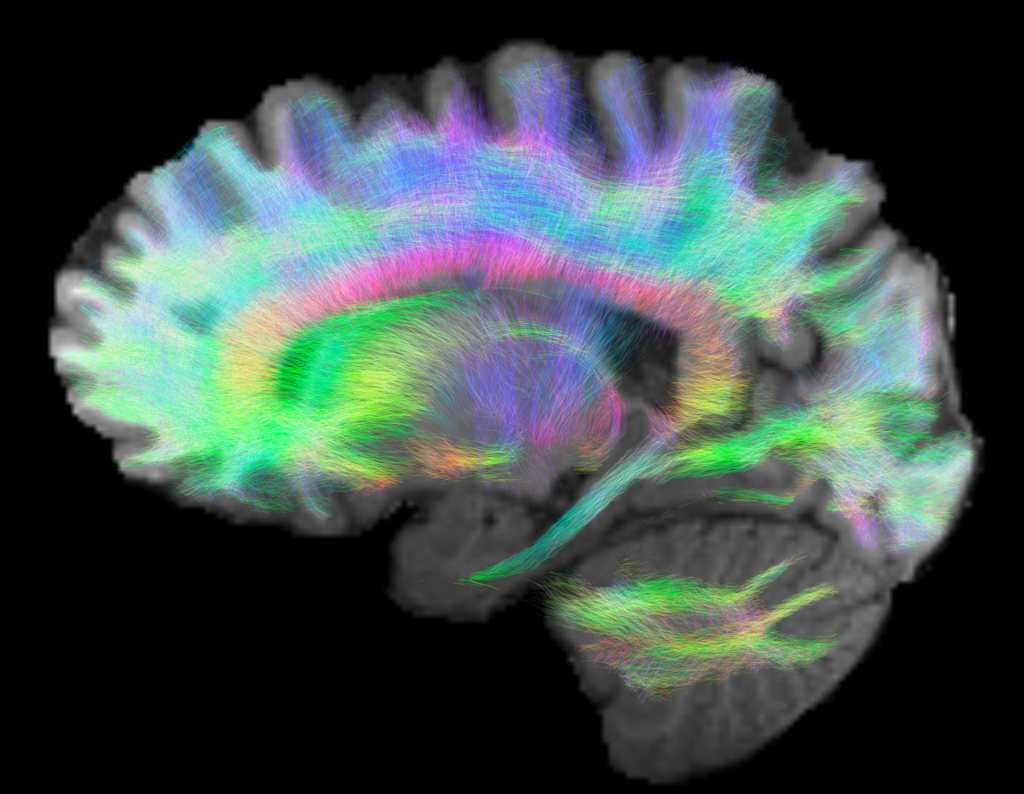
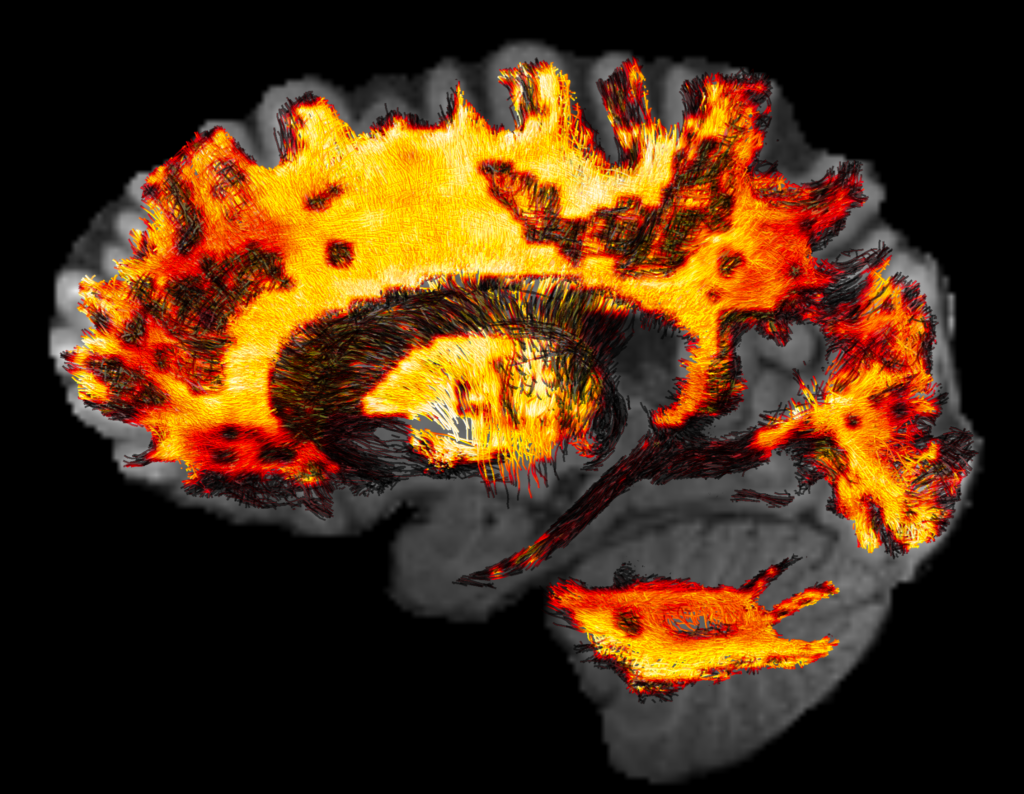
Connectom.X is the world’s best MRI scanner to sense cellular-level brain tissue properties. It has been optimized to measure the diffusion of water molecules, spreading over just a few micrometers and thereby probing the structure of neuronal cells and organelles. In this way, we become sensitive to tissue structure at the scales 100-1000 times smaller than what we nominally resolve with MRI (millimeters). This allows us to develop markers of brain pathology, aging and development in every imaging voxel, and create maps of objective tissue parameters.
The development, validation and clinical translation of cellular-scale parameters forms the rapidly growing field Tissue Microstructure Imaging. Specifically, we focus on the geometric parameters of neuronal cells (diameters of cell bodies, axons or dendrites; the degree of their beading; correlation length scales of their packing arrangement), as well as the fractions of water inside specific cell types and in extra-cellular space, and water exchange rate between cells and extra-cellular space.
The key to the remarkable sensitivity to cellular structure is the strong and fast magnetic field gradients, which help encode micrometer-scale displacements of water molecules, while they are randomly diffusing everywhere in the brain, each one sensing its own tiny microenvironment.
As compared to typical clinical scanners, Connectom.X gradients are about 6-12 times stronger and 3-4 times faster. Both these parameters ensure that we can achieve sensitivity to molecular displacements of just a few micrometers, probing the tiniest scales in the brain.